

Neurosurgery
The SickKids Division of Neurosurgery is the oldest and largest in Canada and one of the premier divisions in the world. We were recently ranked as the top paediatric neurosurgery division in North America, based on our academic performance and impact. Our six neurosurgeons are all internationally renowned leaders in the field of paediatric neurosurgery, with an average of 18 years of experience each. We treat the full range of neurosurgical disorders in children, including the most complex brain and spinal tumours, epilepsy, craniosynostosis, vascular disease, and trauma. We aim to provide all of our patients, from across Ontario and Canada, with the highest level of care available anywhere in the world.
SickKids Neurosurgery sees over 800 patient admissions, 500 surgical cases and 4,000 clinic visits, making it the one of the busiest in North America. Aside from our expert neurosurgeons, children treated here also benefit from the expertise of renowned neuro-oncologists, neurologists, neuroradiologists, neuropathologists and intensivists.
SickKids Neurosurgery has led the world in ground-breaking research in many areas, including brain tumours and hydrocephalus. Our research has led to improved care in these areas and our patients benefit from having access to the latest, cutting-edge treatments.
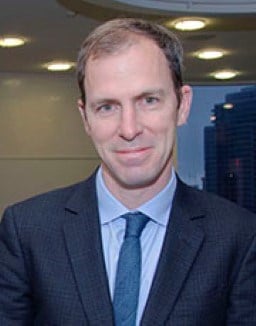
A message from our Chief
The Division of Neurosurgery is dedicated to the compassionate care of children with brain and spinal cord complications. We are one of the largest such paediatric neurosurgical facilities in North America.
The neurosurgical division at SickKids not only looks after patients from the metropolitan area, but also caters to the rest of the province of Ontario as well as other parts of Canada. Our achievements over the last decade are numerous. We provide leading edge and excellent clinical care, have one of the largest and most sought-after fellowship programs in the world, and our teaching scores are outstanding.
I invite you to learn more about our division and what we offer below.
Dr. Peter Dirks, Head of the Division of Neurosurgery
What we do
SickKids Neurosurgery offers the highest level of care to children with all types of neurosurgical disorder. Because of the complexities involved in neurosurgery, the experience of the treating team makes a difference.
At SickKids, we have one of the most experienced and skilled clinical teams in Canada. Children are treated within the Division’s many Clinical Programs:
- Brain and Spinal Cord Tumour Program
- Craniofacial Program
- Epilepsy Program
- Spasticity Program
- Spinal Dysraphism Program
- Complex Spine Program
- Trauma Program
- Vascular Program
- Hydrocephalus Program
- Movement Disorders Program
- Neuromodulation and Deep Brain Stimulation Program
Programs and services
Expand each section below to see important program details.
Treating children with brain tumours is among the most difficult of tasks. Our Tumour Program is the largest in Canada and has provided patients with some of the best survival and cure rates in the world. We accomplish this with a team of highly experienced and dedicated surgeons, oncologists, and pathologists, unmatched by any program in the country.
There are very few places in the world that can provide such high-level care. We have available for our patients the very latest technology, including Gamma Knife radiosurgery and intra-operative evoked potential monitoring, with plans to initiate minimally-invasive laser ablation therapy and intra-operative MRI.
In an effort to continuously improve outcomes for the children we treat, our Tumour Program has made some of the most important new research discoveries in paediatric brain tumours of the last 15 years. We are able to take these latest discoveries and rapidly develop new treatment protocols for our patients. In addition to medical treatment, we also recognize the importance of family and offer a full range of support services to help families help their children.
Our highly experienced, multi-disciplinary team includes plastic craniofacial surgeons, neurosurgeons, neuro-ophthalmologists, otolaryngologists, and neuroradiologists. We treat simple single-suture craniosynostosis as well as very complex, syndromic multi-suture synostoses. We also offer minimally-invasive endoscopic synostosis surgery.
Our team consists of dedicated neurologists, neurosurgeons, and neurophysiologists. Our patients are assessed using the newest and most advanced modalities. We are one of the few pediatric programs in the world to offer magneto-encephalography, a state-of-the-art technology that helps define in detail the seizure focus. We perform more childhood epilepsy surgery than any other program in Canada, including resective surgeries and vagal nerve stimulation.
In conjunction with orthopaedic surgeons and rehabilitation staff associated with the Bloorview Kids Rehab, the division has a continuing involvement in children with gait spasticity. The patient's status is assessed by the multi-disciplinary team at the Bloorview as well as in their gait analysis laboratory.
Our renowned Hydrocephalus Program offers the full-range of treatment options to patients, including the most experienced neuro-endoscopic surgeons in Canada. We are one of the founding institutions in the North American Hydrocephalus Clinical Research Network, providing our patients access to the latest advances in hydrocephalus care. We are also the only centre in Ontario to have a surgeon fully-trained in choroid plexus cauterization, a novel new treatment for paediatric hydrocephalus.
The Neurosurgery Education and Outreach Network (NEON) is comprised of educators, outreach nurses, and hospital administrators from Neurosurgical Centres across Ontario.
Children and adolescents with spinal column/cord injuries or complex congenital anomalies are treated jointly by experienced orthopaedic surgeons and neurosurgeons. Our team also includes highly experienced neurophysiologists, who perform advanced intra-operative neuromonitoring to ensure the safest surgery possible.
SickKids is a Level I Trauma Centre, receiving critically injured children from all over Ontario. Children are treated in our intensive care unit by dedicated and experienced neuro-intensivists who have special expertise in head injury management and conduct cutting edge research.
SickKids offers a multidisciplinary team that includes neurosurgeons, neurologists, and neurointerventional radiologists. We have the largest experience in Canada in dealing with complex paediatric vascular disease, including arteriovenous malformations (AVMs), cavernomas, moya moya, and vein of Galen malformations.







Learn about Neurosurgery on AboutKidsHealth
- Spina bifida Spina bifida occurs when a baby’s spine and spinal cord do not develop properly in the womb, leaving an opening in the spine.
- Treatment for hydrocephalus: Shunt
- Brain Tumours Explore this Learning Hub.
- Surgical Treatment of Epilepsy Read an overview of the surgical process, from determining if your child is a candidate for surgery to post-operative care.
Key staff
Division Head:
Peter B. Dirks, MD, PhD, FRCSC
Head, Division of Neurosurgery, SickKids
Senior Scientist, Developmental, Stem Cell & Biology, SickKids
Below you'll find listings of our key Neurosurgery faculty at SickKids! To see details about our Administrative Staff, please view our Contact section near the bottom of this page.
Jennifer L. Quon, MD, MHS
Paediatric Neurosurgeon, Division of Neurosurgery, SickKids
Associate Scientist-Track Investigator, SickKids Research Institute
George M. Ibrahim, MD, PhD, FRCSC, FAANS, FACS
Senior Scientist, Neuroscience & Mental Health, SickKids Research Institute
Abhaya V. Kulkarni, MD, PhD, FRCSC
Senior Scientist, Associate Chief-Education, Perioperative Services, Child Health Evaluative Sciences, SickKids Research Institute
James T. Rutka, MD, PhD, FRCSC, FACS, FAAP, FAANS
Senior Scientist, Cell & Systems Biology, SickKids Research Institute
Eisha Christian, MD, FAANS, FCNS
Paediatric Neurosurgeon, Division of Neurosurgery Project Investigator, Child Health Evaluative Service, SickKids Research Institute
Stacy Cutler, Support to Dr. Peter Dirks
416-813-5077 ext. 205077, stacy.cutler@sickkids.ca
Sara Breitbart, Support to Drs. Abhaya Kulkarni and George Ibrahim
416-813-8482 ext. 208482, sara.breitbart@sickkids.ca
Arbelle Manicat-Emo, support to Drs. James Rutka and Eisha Christian
416-813-5074 ext. 205074, arbelle.manicat-emo@sickkids.ca
Elisabeth White, Neurosurgery Outreach
416-813-7487 ext 207487, elisabeth.white@sickkids.ca
Asma Ibrahim, Support to Dr. Jennifer Quon
416-813-7654 ext 224740, asma.ibrahim@sickkids.ca

Neurosurgery labs
See details about our active research labs below.
Cancer cells typically acquire the ability to grow when they shouldn’t, stimulate formation of blood vessels to ensure their survival, bypass cell cycle and apoptosis safeguards and find ways to exploit their microenvironment that enable them to migrate away and form tumours at distant sites.
Malignant brain and other central nervous system cancers are the second most common cancers in children. Despite treatment, overall five-year survival remains only at 60 per cent with survivors often suffering from treatment-related side effects. Therefore, investigation into the molecular events contributing to brain tumour pathogenesis will result in improved detection, diagnosis and therapy.
The James Rutka lab currently investigates the molecular mechanisms of brain tumour formation and migration. One research project focuses on the molecular genetic events that result in the sporadic occurence of medulloblastoma. Medulloblastomas frequently harbour genetic abnormalities such as isochromosome 17q and duplication of chromosome 7. In addition, many signalling pathways, important during development, are mutated in medulloblastoma. Genes important in keeping cancer at bay can also be silenced epigenetically through promotor methylation or by misregulation of micro-RNA (miRNA) mediated gene regulation. Investigators in the lab are determining.
The Peter Dirks lab has recently isolated and characterized a cancer stem cell from human brain tumours of different phenotypes that express neural stem cell markers and have stem cell-like behaviour in vitro and in vivo. These cells were isolated from both low grade and high grade primary brain tumours (astrocytoma, glioblastoma, ependymoma, medulloblastoma, anglioglioma) and represent only a small fraction of the total tumour cell population.
Dr. George Ibrahim's research lab is dedicated to the study of neural networks in children with epilepsy and neurodevelopmental disorders through a combination of connectomic, computational neuroscience and machine learning approaches. The lab also leads several novel, translational clinical trials of neuromodulation in children. Dr. Ibrahim's work has been published in over 250 peer-reviewed journals and is funded by several organizations, including the Canadian Institutes of Health Research.
The Michael Taylor lab uses the tools of forward and reverse genetics to better understand the underlying biology of medulloblastoma and ependymoma - two of the most common malignant paediatric brain tumours.
In forward genetic approaches, the normal cells that are thought to give rise to a cancer are agitated in a systemic fashion in an attempt to determine which genes, or signalling pathways promote malignant transformation. By randomly over-expressing genes in the cellular precursor of medulloblastoma, we hope to determine which genes are important to the initiation, maintenance and progression of medulloblastoma. This sort of functional genomic approach has recently been made feasible by the completion of the mouse genome project.
University of Toronto partnerships
The Division of Neurosurgery at SickKids is one of several units associated with the neurosurgical training program at the University of Toronto. In addition to the informality of bedside and theatre teaching, the neurosurgical fellow is exposed to the didactic instruction of weekly clinical rounds and a residents' seminar based on techniques for passage of the examination of the Royal College of Physicians and Surgeons of Ontario and the American Board of Neurological Surgery.
Each week there are neurosurgical rounds, including morbidity and mortality sessions, combined neurology/neurosurgery rounds, tumor board and epilepsy rounds.
Research and publications
The Division of Neurosurgery has a computerized data retrieval system which provides the opportunity for one to prepare and publish reviews on paediatric neurosurgical topics. SickKids has an affiliated Research Institute where neuroscientists are actively involved in a variety of projects. The Arthur & Sonia Labatt Research Centre has a laboratory devoted to neurosurgical projects on neuro-oncology.
Visitors and observers
The University of Toronto provides for several visiting professorships including one devoted to paediatric neurosurgery. In addition, visitors from around the world spend time as observers on the neurosurgical unit and take part in various teaching sessions.
Residents
The University of Toronto neurosurgical training program provides two residents on six-monthly rotations to the Division of Neurosurgery at SickKids. These residents who are at varying levels of their training have only had adult clinical experience before arriving at SickKids for their exposure to paediatric neurosurgery. In addition to the University of Toronto residents, self-funded residents from other training programs come for periods of three to six months to gain exposure in paediatric neurosurgery. Medical students also spend elective time on paediatric neurosurgery.
Fellowship
The clinical fellow in paediatric neurosurgery at SickKids is an individual who has completed his or her neurosurgical training and is interested in an academic career in paediatric neurosurgery. He or she will be exposed to a wide variety of clinical material and is provided with ample time for clinical research. The neurosurgical laboratory is available for specific research projects.
The neurosurgical fellow at SickKids is responsible for the entire neurosurgical service. The fellow makes rounds with all the residents and students each morning before the day begins. This activity is carried out during the week and on the weekends as well. The fellow has independent operating privileges although surgery is booked under the name of the surgeon who is primarily responsible for the care of the patient. The fellow assigns and supervises the residents, and can choose which cases they wish to scrub on. It is expected that the fellow will provide second call for the emergency room and come in at night or on weekends to assist the resident with trauma or emergency procedures. A supervising staff neurosurgeon is always available.
Neurosurgical outpatient clinics are held four days a week and the neurosurgical fellow has the choice of attending a clinic run by one of the staff neurosurgeons.
The neurosurgical fellow organizes the neurosurgical teaching rounds. In collaboration with the chief resident in neurology the fellow organizes the Combined Neurology-Neurosurgery Conference each week and in collaboration with the neuro-oncologists structures the Neuro-oncology Rounds. The fellow is also in charge of the monthly journal club, which is held in the home of one of the staff neurosurgeons.
In the past, men and women from across Canada, the United States, Argentina, Australia, Brazil, Great Britain, Ireland, Germany, Israel, Japan, Thailand, Taiwan, South Korea, the Philippines, Saudi Arabia, France, Italy and South Africa have received fellowship training in the Division of Neurosurgery at SickKids.
Contact Neurosurgery
Address
Division of Neurosurgery
Rooms 1504 and 1503, Hill Wing
The Hospital for Sick Children (SickKids)
555 University Avenue
Toronto, ON
M5G 1X8
Phone: 416-813-5222
Fax: 416-813-4975
Administrative Team
Sarah Carter, Supervisor, Administrative Services
Divisions of Neurosurgery and Cardiovascular Surgery
Surgical and Administrative Coordinator to Dr. Peter Dirks
416-813-6426 or ext. 206426, sarah.carter@sickkids.ca
Michelle Goertzen, Education Administrative Coordinator
michelle.goertzen@sickkids.ca
For enquiries regarding neurosurgical fellowships, observerships and elective rotations please call 416-813-6428 or email: neurosurgery.fellowship@sickkids.ca
Seetha Sriharan, Surgical Administrative Coordinator
Support to Drs. George Ibrahim
416-813-6125, seetha.sriharan@sickkids.ca
Krystal Chiu, Surgical Administrative Coordinator
Support to Drs. Abhaya Kulkarni, and Jennifer Quon
416-813-7261, or ext: 407261 krystal.chiu@sickkids.ca
Sarah Ramanathan, Surgical Administrative Coordinator
Support to Drs. James Rutka and Eisha Christian
416-813-6425, sarah.ramanathan@sickkids.ca