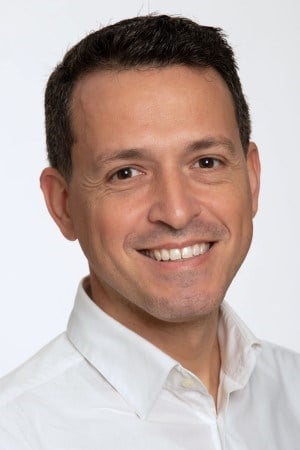
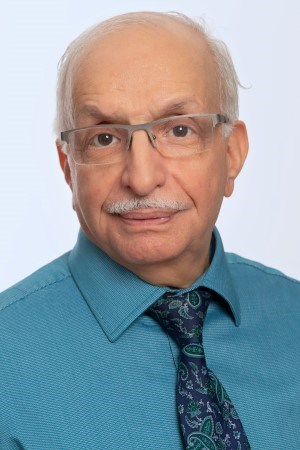
Michael Taylor, MD, PhD, FRCS(C)
The Hospital for Sick Children
Neurosurgeon
Neurosurgery
Research Institute
Principal Investigator
The Arthur and Sonia Labatt Brain Tumour Research Centre
Scientist
Developmental & Stem Cell Biology
University of Toronto
Associate Professor
Departments of Surgery and Laboratory Medicine and Pathobiology
Phone: 416-813-7564
Fax: 416-813-4975
e-mail: mdtaylor@sickkids.ca
Brief Biography
Dr. Taylor was born in Calgary, Alberta and was educated at The University of Western Ontario where he obtained his MD degree in 1994. He entered the University of Toronto Neurosurgery residency program in 1994. He then did a PhD in Molecular Pathology at the University of Toronto (1998-2002), and completed his residency training in 2003. In 2003 Michael was awarded a Detweiler Travelling Fellowship from the Royal College of Physicians and Surgeons of Canada for fellowship training in paediatric neurosurgery and paediatric neuro-oncology at St. Jude Children’s Research Hospital in Memphis Tennessee. Dr. Taylor also did a post-doctoral fellowship in Department of Developmental Neurobiology at SJCRH.
Dr. Taylor joined The Hospital for Sick Children (SickKids), Division of Neurosurgery in 2004. He has an appointment in the Developmental Biology Program at the Research Institute in The Hospital for Sick Children. He is a principal investigator at the Arthur and Sonia Labatt Brain Tumour Research Centre. He also has cross-appointments to the Departments of Surgery & Laboratory Medicine and Pathobiology at the University of Toronto. His research is supported by the Canadian Institutes of Health Research (CIHR), National Cancer Institute of Canada, and SickKids Foundation. He has published over 30 peer reviewed publications. Dr. Taylor’s laboratory focuses on the genetics of paediatric medulloblastoma and ependymoma. Clinically, he has a special interest in paediatric neuro-oncology. He is on the editorial board of the Journal of Neuro-Oncology.
Clinical Care Activities
Dr. Taylor is a paediatric neurosurgeon at SickKids. He does general paediatric neurosurgery, with a special focus on paediatric neuro-oncology.
Research Interests
Dr. Taylor is interested in the molecular genetics of medulloblastoma and ependymoma, two of the most common malignant paediatric brain tumours. Through a better understanding of the molecular biology of these tumours, we hope to devise novel, more effective treatment strategies.
Research Activities
The Taylor laboratory focuses on:
- Identification and characterization of mutations in established paediatric medulloblastomas.
- Using tools from functional genomics to determine how a normal cerebellar cell can be turned into a medulloblastoma cell.
- Identification and characterization of the mutations in established paediatric ependymomas.
- Using tools from functional genomics to determine how a normal radial glial cell can be turned into an ependymoma cell.
External Funding
- Canadian Institutes of Health Research
- National Cancer Institute of Canada
- SickKids Foundation
- American Brain Tumor Association
- B.R.A.I.N.child
Achievements
- Schweizguth prize, 2005
International Society of Pediatric Oncology (SIOP) - Pediatric Brain Tumor Foundation Award, 2004
- Best Individual Investigator Award, 2004
AANS/CNS Brain Tumor Satellite Symposium - Canadian Institutes for Health Research:
Clinician Scientist Award: Phase I - Peter A. Steck Memorial Award, 2004
- Detweiler Travelling Fellowship, RCPS of Canada
- Candian Institutes of Health Research Brainstar Award, February 2003
- The Gallie-Bateman Resident Research Award, 1st Prize, 2002
- K.G. McKenzie Memorial Prize For Basic Science Neurosurgical Research, 2002
- Preuss Resident Award for Neuro-Oncology Research, 2000
Publications
Taylor MD, Poppleton H, Fuller C, Su X, Liu Y, Jensen P, Magdaleno S, Dalton J, Calabrese C, Board J, Macdonald T, Rutka J, Guha A, Gajjar A, Curran T, Gilbertson RJ. Radial glial cells are candidate stem cells of ependymoma. Cancer Cell 2005. 8(4), 323-335
Taylor MD, Zhang X, Mainprize T, Liu L, Raffel C, Hogg D, Rutka JT. Medulloblastoma derived mutant of SUFU fails to suppress Wnt signaling. Oncogene 2004. 23(26), 4577-83
Yokota N, Mainprize TG, Taylor MD, Kohata T, Loreto M, Ueda S, Dura W, Grajkowska W, Kuo JS, Rutka JT. Identification of differentially expressed and developmentally regulated genes in medulloblastoma using suppression subtraction hybridization. Oncogene. 2004 Apr 5
Gladdy RA, Taylor M.D., Williams CJ, Grandal I, Karaskova J, Squire JA, Rutka JT, Guidos CJ, Danska JS. The RAG-1/2 endonuclease causes genomic instability and controls CNS complications of lymphoblastic leukemia in p53/Prkdc-deficient mice. Cancer Cell 2003. 3(1), 37-50
Taylor MD, Liu L, Raffel C, Hui CC, Mainprize TG, Agatep R, Chiappa S, Zhang X, Gao L, Lowrance A, Hao A, Goldstein A, Stavrou T, Scherer S, Dura WT, Wainwright B, Rutka JT, Hogg D. Mutations of suppressor of fused predispose to medulloblastoma. Nature Genetics 2002: 31(3): 306-310.
Taylor MD, Mainprize TG, Rutka JT. Molecular genetics of pineal region neoplasms. Journal of Neuro-Oncology 2001: 54, 219-238
Ng D, Stavrou T, Liu L, Taylor MD, Gold AM, Dean M, Dubovsky EC, Vezina G, Nicholson HS, Byrne J, Rutka JT, Hogg D, Reaman GH, Goldstein AM. A Retrospective family study of medulloblastoma. American Journal of Medical Genetics 2005. 134(4), 399-403
Taylor MD, Mainprize TG, Rutka JT. Molecular insights into medulloblastoma and central nervous system primitive neuroectodermal tumor biology from hereditary syndromes: a review. Neurosurgery 2000: 47; 888-901
Bayani J, Zielenska M, Marrano P, Kwan Ng, Taylor MD, Jay V, Rutka JT, Squire JA. Molecular cytogenetic analysis of medulloblastomas and supratentorial primitive neuroectodermal tumors using conventional banding, comparative genomic hybridization and spectral karyotyping. Journal of Neurosurgery 2000. 93: 437-448
Taylor MD, Gokgoz N, Andrulis I, Mainprize T, Rutka JT. Familial posterior fossa brain tumors of infancy secondary to germline mutation of hSNF5. The American Journal of Human Genetics 2000; 66: 1403-1406