

Infectious Diseases

The Division of Infectious Diseases at The Hospital for Sick Children was founded in 1979 under the leadership of Dr. Ronald Gold. It consisted of a Consultation Service, an out-patient clinic and two Infectious Diseases in-patient wards. Prior to 1979, the two Infectious Diseases wards were run by part-time general paediatricians with a special interest in Infectious Diseases. When the new Division was fully established, there were five full-time members of whom four were clinician researchers and one was a basic scientist. In addition, there were several part-time paediatricians with a special interest in Infectious Diseases. In 1992, the Division became a consultation-only service, with expansion of outpatient programs, but no in-patient ward responsibilities. In 2004, the consultation service was divided into two, focusing on general infections and infections among immunocompromised patients, respectively.
Currently, we provide a consultation service to all divisions and departments in the hospital by providing evaluation and management advice on infections, infectious diseases, and infection prevention and control. Our involvement is with the immunocompromised host, particularly those with malignancies, transplants and HIV. Outpatient care is mainly focused on tuberculosis, HIV, congenital infections, and follow-up of osteomyelitis, only to name a few.
Family centred care
The Division of Infectious Diseases provides inpatient consultation and ambulatory interdisciplinary family centered care to patients requiring secondary/tertiary/quaternary Paediatric Infectious Disease services. The Division and its affiliated programs provide care to the children of Metropolitan Toronto, the Greater Toronto Area and indeed the province of Ontario. The Division works closely with the Hospital Infection Prevention and Control Service. The Division has two in-patient consultation services that address infections in previously healthy children and immunocompromised children, respectively.
What we do
The Paediatric Infectious Diseases Clinic is a specialized service for the assessment and treatment of children and adolescents who have been exposed to or infected with an infectious disease. We provide family-centered, evidence-based care from consultation and testing to highly complex interdisciplinary chronic care treatment management.
Programs and services
Expand each section below see important clinic details.
Our ambulatory service is structured around the following disease categories:
- General Paediatric Infectious Diseases Clinic
- Paediatric HIV
- Tuberculosis
- Congenital/Perinatal infections
- International communicable diseases
- Central nervous system infections
- Transplant-related Infectious Diseases
To contact the Infectious Diseases clinic, please phone 416-813-5141.
- All patients require a referral to visit our clinic.
- If you are a health-care professional, log in to eCHN to submit your referral. From your eCHN account, you will be seamlessly connected to SickKids e-referral platform, EpicCare Link.
ID Clinic Schedule
- HIV Clinic - Mondays and Wednesdays 9 a.m. to 12 p.m.
- Congenital Infections Clinic - Fridays 9am. to 12 p.m.
- TB Clinic - Wednesdays and Thursdays 8 a.m. to 12 p.m.
- General ID Clinic - Thursdays 8 a.m. to 12 p.m.
- Travel Clinic - Tuesdays and Fridays 8 a.m. to 12 p.m.
- Rapid Access Clinic - Monday Wednesday and Friday 9am -12pm
We look forward to meeting you and your child and working together to make the most of your clinical experience at SickKids.
There are two clinical inpatient services, general infectious disease and immunocompromised, that are staffed by separate teams of fellows and ID consultants.







AboutKidsHealth resources
- HIV and AIDS Learn more about HIV, AIDS and the test and treatment options that are available.
- Vaccines: Concerns about immunizing your child Many parents have questions about vaccines. Find information about how many diseases vaccines protect children against in Canada.
Key staff
The Paediatric Infectious Diseases Division is made up of a diverse interdisciplinary team of infectious disease experts and advanced practice nurses, with access to allied health professionals.
Division Chief:
Upton Allen, Infectious Diseases Consultant
Training Program Director:
Kescha Kazmi, Infectious Diseases Consultant
Infection Control:
Michelle Science, Medical Advisor for Infection Prevention & Control
Expand the sections below to see staff lists across our Division.
- Ari Bitnun, Infectious Diseases Consultant
- Michelle Science, Infectious Diseases Consultant
- Shaun Morris, Infectious Diseases Consultant
- Anupma Wadhwa, Infectious Diseases Consultation
- Valerie Waters, Infectious Diseases Consultant
- Ian Kitai, Infectious Diseases Consultant (TB Specialist)
- Stanley Read, Infectious Diseases Consultant
- Kescha Kazmi, Infectious Diseases Consultant
- Pierre-Philippe Piché-Renaud, Infectious Diseases Consultant
- Ray Lam, PHC-NP, Family & Travel Medicine Practitioner, DNP(C), TB & Travel Medicine
- Leigh Martin, NP, Pediatrics, Congenital Infections
- Georgina MacDougall, RN - HIV Clinic Coordinator
- Debra Louch, RN - General and Congenital Infectious Diseases Clinic Coordinator
ID Clinic contact
- Wayne Moore - Clinical Clerk
- Alice Litosh, RN – Research Staff
- Maria-Rosa La Neve – Research Staff
- Cheryl Arneson – Research Staff
- Suganya Lee – Research Staff
- Manuela Merelles-Pulcini - Research Staff
Dana Hiraldo Santos - Program Coordinator, Divisional
Provides administrative support to: Dr. Upton Allen, Division Chief
Mohsin Akhtar - Program Coordinator, Education
Provides administrative support to: Dr. Kescha Kazmi
Grace Baiano - Administrative Coordinator
Provides administrative support to: Drs. Ari Bitnun, Shaun Morris, P.P. Piché-Renaud and Craig Frankel
Chrisia Rayos - Administrative Coordinator
Provides administrative support to: Drs. Ian Kitai, Valerie Waters and Anupma Wadhwa
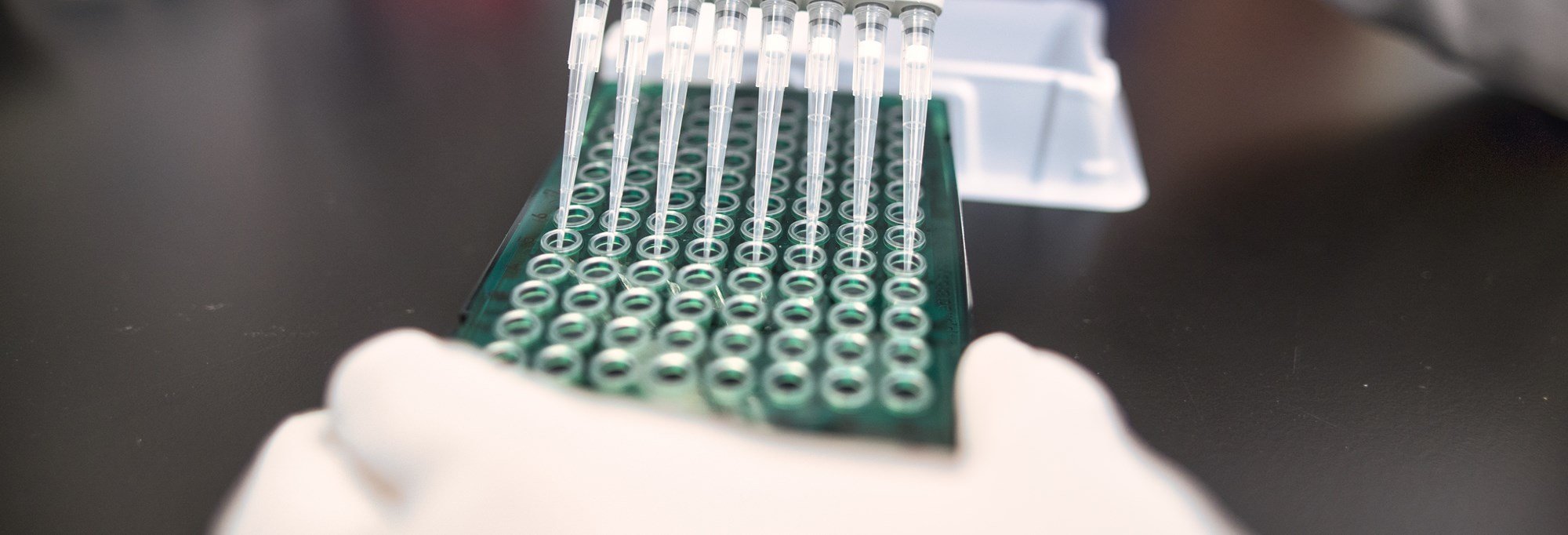
Our research initiatives are structured around themes that include host susceptibility and related factors and innovative antimicrobial and associated therapies. Specific research initiatives include multicentred paediatric HIV studies related to maternal-to-child transmission and studies on new antiretroviral drugs, vaccine studies and research into the mechanisms of host susceptibility to infections.
These infections include viral myocarditis, HIV and EBV-related post-transplant lymphoproliferative disease (PTLD) and encephalitis. Multi-centered trials related to the diagnosis and prevention of infections in transplant patients are ongoing, as well as participation in national surveillance studies and national collaborative paediatric studies through the Paediatric Investigators Collaborative Network on Infections in Canada (PICNIC). Our research in pediatric infection control includes the clinical and molecular epidemiology of paediatric nosocomial infections.
Our research programs are designed to fulfill the following characteristics:
- Potential to link bench to bedside
- Stimulate further research (clinical or basic science)
- Main activity based in Infectious Diseases, but multidisciplinary
- The volume of children affected is a consideration, but equally important would be less common conditions with catastrophic outcomes.
- Potential for national and international profiles.
Priority programs
Our division currently targets priority areas of excellence in paediatric research that form the basis of research programs. Across each these areas, they is a cross-cutting thematic focus on host susceptibility and innovative antimicrobial therapies. Below, see Disease Groups of research interest, followed by their Major Focus.
- Transplant Infectious Diseases: EBV and related herpes group viruses
- Infections in Cancer Patients: Herpes group infections, Fungal infections.
- Paediatric HIV: Perinatal HIV
- Paediatric Emerging Infections: Acute respiratory infections
- Acute brain infections and related syndromes: Childhood encephalitis
- International Communicable Diseases: Global Child Health, Neonatal sepsis
If you're interested in an accredited educational or training program through Infectious Diseases at SickKids, expand each section below to see important details.
Our program is accredited by the Royal College of Physicians and Surgeons of Canada (RCPSC) and is one of the oldest and largest training programs in Canada. It is designed to meet the requirements for subspecialty training in Paediatric Infectious Diseases. This includes 11 blocks of Paediatric ID consult service (divided between the general ID and the immunocompromised ID consult services), 2 blocks of adult ID consult service, 1.5 blocks of infection control, 1.5 blocks of antibiotic stewardship, 3 blocks of microbiology, 1 block of public health and 4 elective blocks.
The trainees also attend a half-day clinic per week. In first year this longitudinal clinic experience includes experiences in the congenital infection clinic, auto inflammatory clinic, HIV clinic, tuberculosis clinic, and general ID clinic. In their 2nd year, trainees attend their own individual continuity clinic.
There is a structured formal paediatric ID academic curriculum that includes on average three hours of protected teaching per week. In addition to strong teaching while on the microbiology rotations, a structured year-long plate rounds series also occurs. Other formal teaching includes the week-long annual National ID fellows’ retreat for which all of our fellows are given protected time to attend.
For more detailed program information please visit the University of Toronto Paediatric Infectious Diseases website.
The deadline to apply is January for the following July 1st start (7 months in advance).
To apply, please refer to the CaRMS website for eligibility criteria and application process.
In addition to the RCPSC stream of our training program, we offer a two-year clinical fellowship for international trainees who plan to further develop the field of paediatric infectious diseases upon return to their home countries. The rotations and curriculum for this two-year fellowship program are like what is described above for the RCPSC subspecialty residency program. Funding support generally involves sponsorship from the applicant’s home institution or government; however, there are also limited locally funded positions.
Please note: The application link for the July 2028 start of fellowship is now available below. The deadline to apply is January 8, 2027.
Medical Students
Electives are accepted for three to six weeks in length. The trainee must be in their clerkship year (year three or four of training) and have completed their core paediatrics or core internal medicine rotation. The University of Toronto Visiting International Electives Program offers elective placements between January to June ONLY for a maximum of four weeks. Electives are not offered to students from international medical schools between the months of July and December.
Please visit the MD Program Electives website via the University of Toronto for information on how to apply.
Resident Electives
Resident electives are available throughout the year. Please email id.trainingprogram@sickkids.ca to check availability prior to completing the application process. UofT residents are not required to apply through the online application system and can arrange electives directly with the program.
Please visit the PostMD Elective Training website through the University of Toronto for information on how to apply.
International Electives
Please email id.trainingprogram@sickkids.ca to confirm elective availability and application requirements. Documents must be submitted at least 8 months in advance.
To submit your request, please see the International Medical Observer Application page on the SickKids International website.

Join the next Paediatric ID Update Conference
Saturday, March 7, 2026
8 a.m. - 12:30 p.m.
Topics: Pneumonia, Vaccines, Ticks and more!
Format: Virtual, (live and interactive)
Recordings: Available to registrants after the conference
Accreditation: Previous Paediatric ID Update conferences have been accredited by the Royal College of Physicians and Surgeons of Canada for Maintenance of Certification (MOC) Section 1 credits.
Contact Infectious Diseases
If you cannot come to your scheduled clinic appointment or have a question about your appointment, please call the clinic clerk at 416-813-5141. We will try our best to schedule another appointment as soon as possible, based on availability.
Phone: 416-813-5141
Location: The Infectious Diseases Clinic in Clinic 7 is located on the Main Floor of the Black Wing.
- If coming in through the 555 University Avenue entrance, turn right to get to Clinic 7.
- If coming from the Atrium, walk down Main Street until Shoppers Drug Mart and turn left.
Our history
The Division of Infectious Diseases at The Hospital for Sick Children was founded in 1979 under the leadership of Dr. Ronald Gold. It consisted of a Consultation Service, an out-patient clinic and two Infectious Diseases in-patient wards. Prior to 1979, the two Infectious Diseases wards were run by part-time general pediatricians with a special interest in Infectious Diseases. When the new Division was fully established, there were five full-time members of whom four were clinician researchers and one was a basic scientist. In addition, there were several part-time pediatricians with a special interest in Infectious Diseases. In 1992, the Division became a consultation-only service, with expansion of outpatient programs, but no in-patient ward responsibilities. In 2004, the consultation service was divided into two, focusing on general infections and infections among immunocompromised patients, respectively.